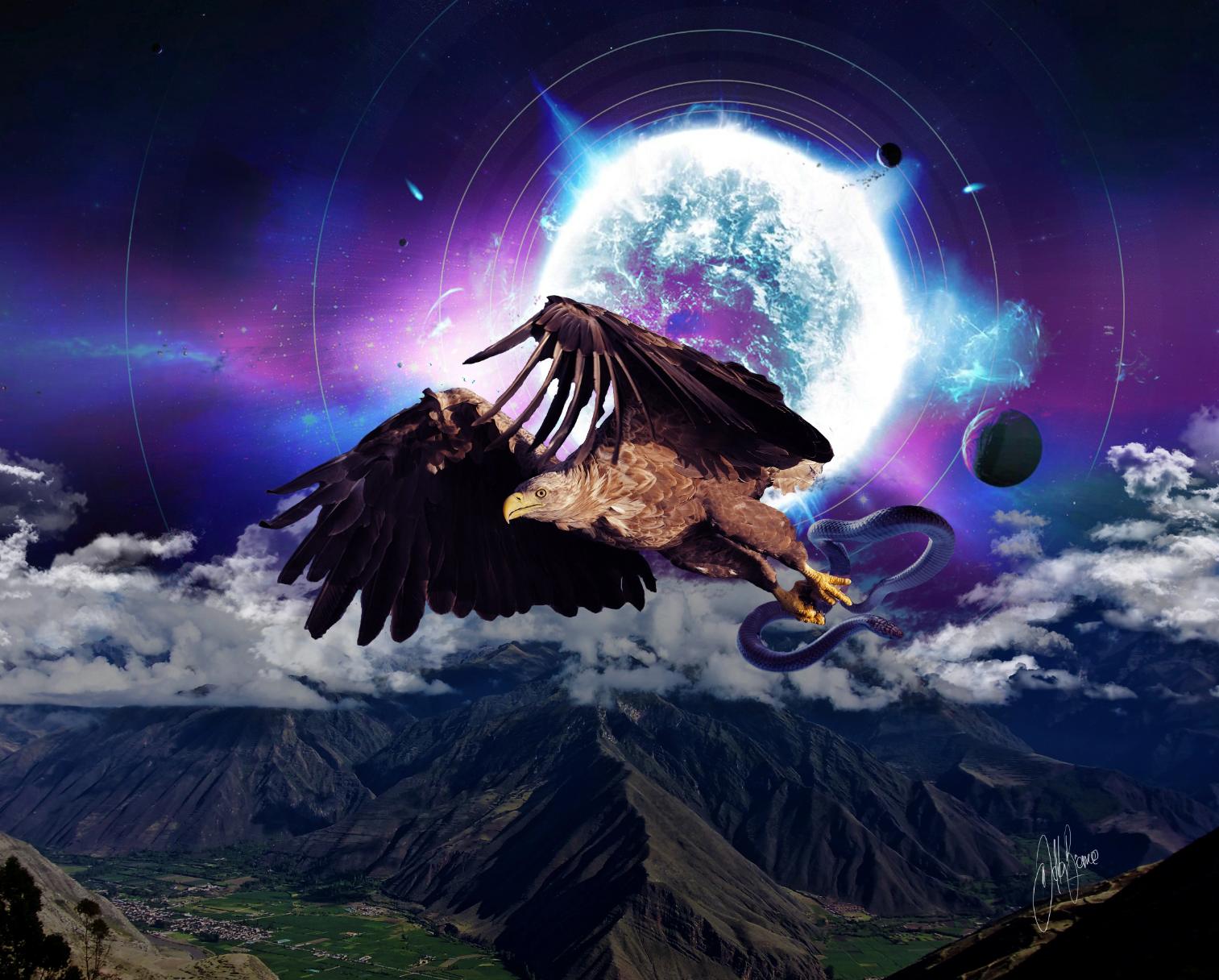
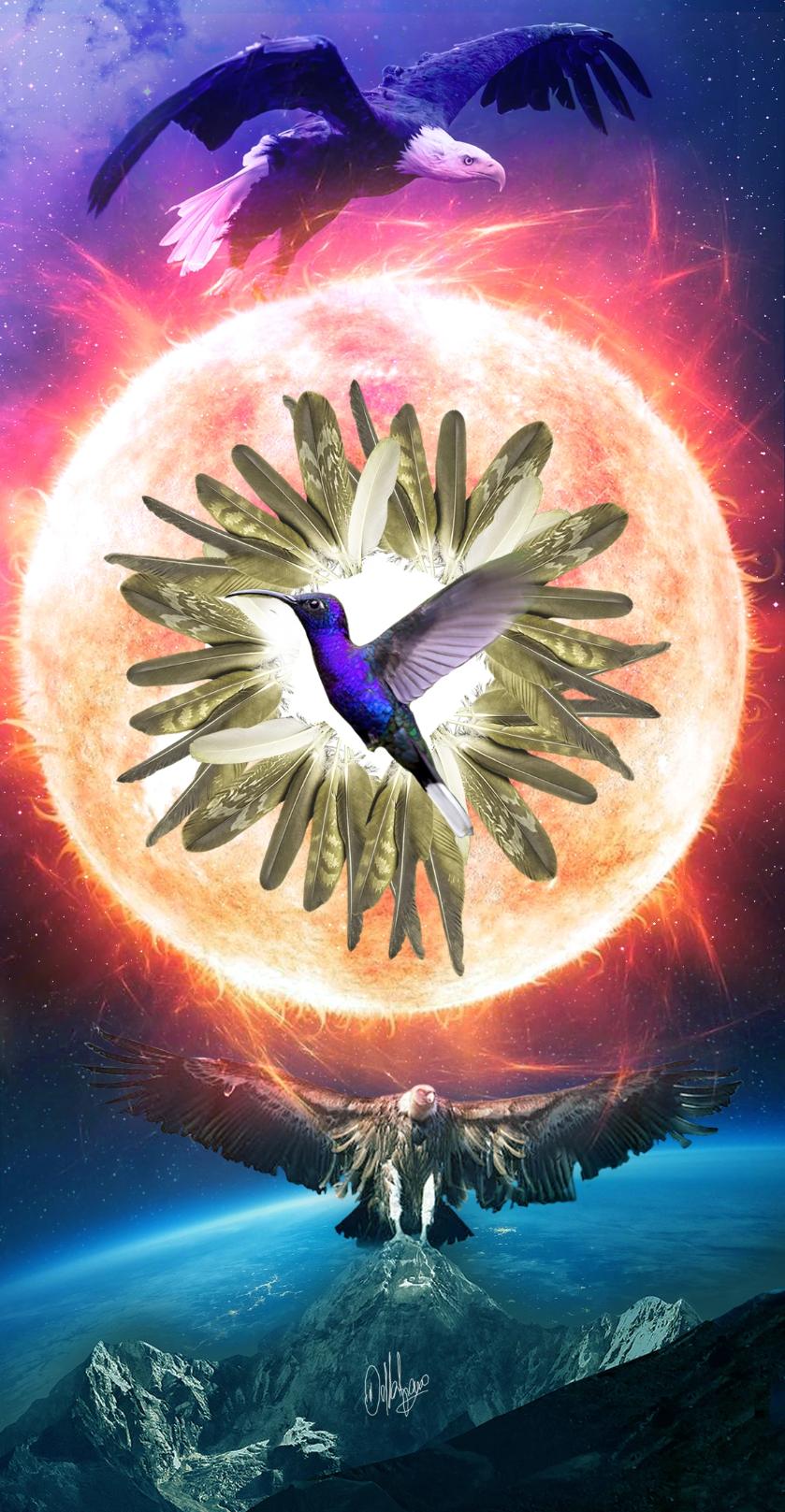
There is a trap in every search for elevation: confusing transcending something with tearing it from its ground before it completes its cycle. The eagle sees from above with a precision that nothing terrestrial possesses — but not everything it grabs can survive the height. The serpent is not a captured enemy. It is an intelligence that operates by contact with the earth, by repetition, by shedding. Its way of renewing itself is cyclical, slow, close to the ground. Taking it out of there does not transform it — it displaces it.
That tension is what operates in this card. Not the classic battle between the high and the low, but the more subtle question: what happens when you try to elevate something that works on one plane but does not work on another? Attachment disguised as transcendence looks exactly like this — taking things that belong to the earth to the heights, not because you love them, but because you cannot stand leaving them where they are. There are cycles that are not overcome by flying above them. They are overcome by letting them shed in their own territory, with their own slowness.
The cosmic scale surrounding the scene does not resolve the tension — it amplifies it. There is a personal time (the serpent, what repeats in your life) and an impersonal time (what orbits regardless of what you do). Being in front of that difference in scale does not diminish you: it places you. What repeats in your life has weight, shape, rhythm. But it is not all that exists. And confusing your personal cycle with the totality of time is another way of not letting go.
The honesty demanded by this card is uncomfortable: distinguishing when your desire to rise comes from a clear vision, and when it comes from the discomfort of remaining on the earth. Sometimes the most genuine way to transcend a pattern is to let it finish on the ground where it started, without wings, without talons, without haste.