Back to gallery
The Temple, symbolic card No. 25 of the Soul level of Trazado Álmico
Card N°25 · Soul Level

The Temple

The Inner Temple

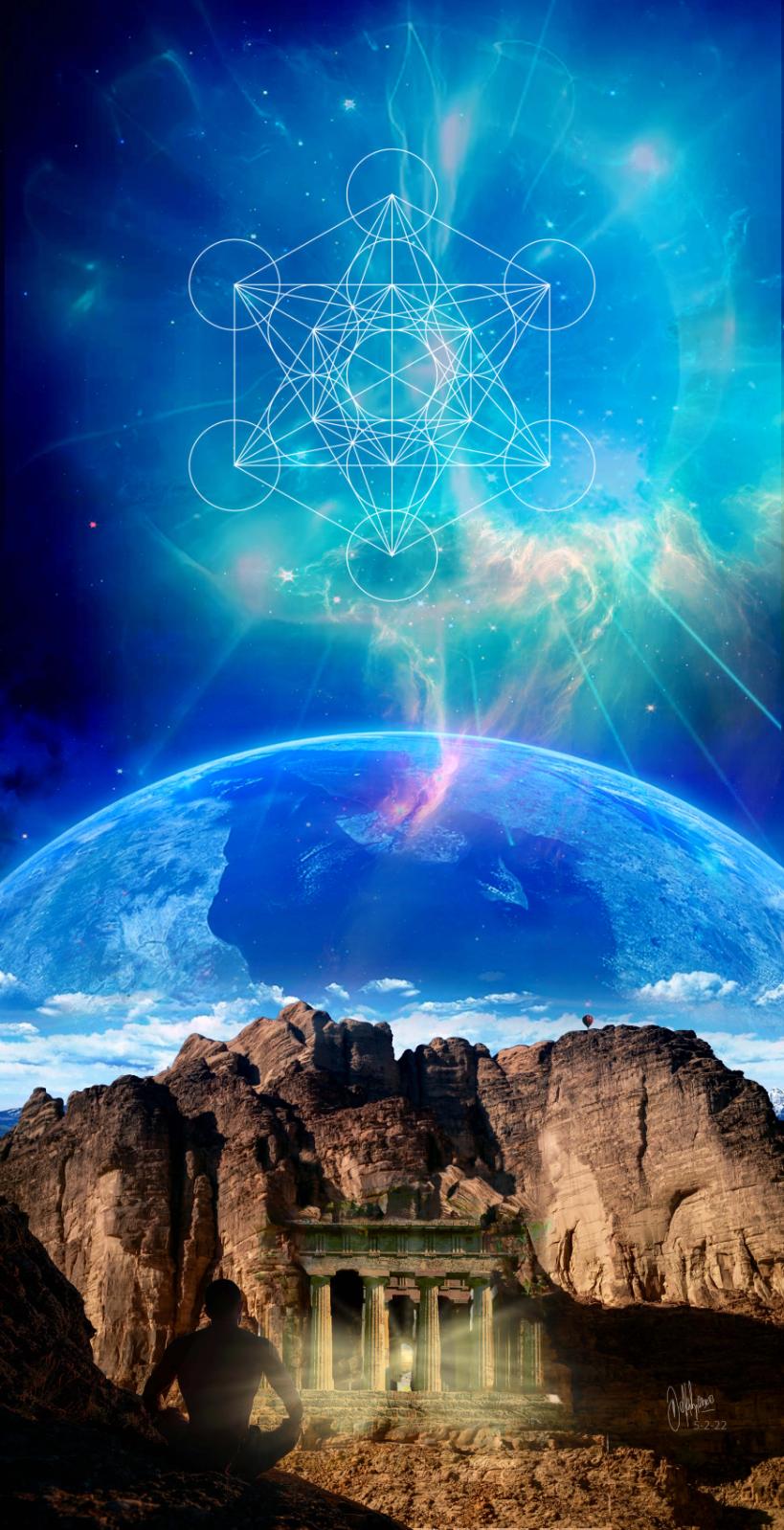
Someone sat in front of a temple and did not enter. Not because they cannot—because they are still looking. Above, the sky opens in geometry: lines, circles, a structure that sustains something that rock cannot sustain alone. Below, columns among stones. Inside, light. Everything is still. The question is not what is inside the temple. The question is why you are still outside.

The Temple appears when what is lacking is not knowledge but entry. There is something in you that already has structure, that already has light—but you keep looking at it from the outside. Working with this card is recognizing that the search became more comfortable than the encounter, and that the only thing left is to cross the threshold.

The temple is not at the summit. It is not reached by climbing, nor is it conquered by accumulated merits. It is inside the rock itself, carved out of the material that was already there — the very stone that forms the canyon, the very history that brought you to this point. This inverts the usual logic of the spiritual search: the sacred is not higher up or further away. It is further within. And the 'inward' direction is the one that generates the most resistance, because it implies ceasing to search.

There is a subtle trap in any process of self-knowledge: the moment where the search itself becomes an identity. While you search, you have direction, you have purpose, you have something to do. Finding implies staying still, and staying still before what you already know is uncomfortable in a way that no external master can resolve for you. The figure seated in front of the temple is not someone who doesn't know where the door is. It is someone who sees it and yet does not enter — because entering means ceasing to be the one who searches and beginning to be the one who inhabits.

What sustains the entire scene from above — the geometry where every point connects with all the others — is not a cosmic ornament. It is the principle that what seems separate (the rock, the temple, the seated body, the planet, the cosmos) responds to the same structure. You do not need to believe in a particular system to recognize that there is order behind the visible. That order is not imposed — it is discovered when you stop moving long enough to see it.

The light emerging from the interior does not illuminate the sky. It illuminates the step of entry. It is a practical light, not a spectacular one — it shines exactly on what you need to see to take the next step. And that step requires no additional preparation. The canyon has already been crossed. The rock has already left its marks. What follows is not another stretch of the path. It is to stop walking and enter.
The seated figure — The one who looks before entering

What is seen: a human silhouette on the left, sitting on the rocks, in a still posture, looking toward the temple. They are not meditating toward the sky. They are not looking for answers above. They look forward, toward the temple between the rocks. It is someone who reached the place and stopped. That pause is not weakness — it is the moment just before recognizing that what you were looking for was already built, and that entering changes everything because afterward you cannot go back to pretending you didn't know.

The temple between the rocks — What was not built, was found

What is seen: a temple with classical columns embedded between sandstone rock formations. Warm light coming out of its interior. It is not at the top of anything — it is inside the canyon, surrounded by stone. The temple is not high up. It is not in an inaccessible place. It is in the middle of the rock, at ground level, between the walls of the terrain. It was not built on top of the mountain — it was carved into it. That says something about where what you seek is: not higher up, not further away. Further inside. The light that comes from its interior does not illuminate the sky — it illuminates the step of entry.

The rock formations — The terrain that must be crossed

What is seen: ochre sandstone walls on both sides, forming a natural corridor toward the temple. Rough, warm, desert texture. They are not snowy mountains or conquered peaks. They are dry, hard rock, worked by time. The path to the temple is not a trail of flowers — it is a canyon. Narrow, concrete, with walls that do not move. What you had to cross to get here was not decorative. It was real terrain, and it left marks.

The blue planet — The scale of what is at stake

What is seen: a huge, blue planet behind the rocks, occupying a large part of the sky. It looks like Earth seen from very close. The planet is not far away — it is there, behind the rocks, like an immense backdrop. What you do in that canyon, in front of that temple, sitting on that rock, is not a small event. It has scale. Not because the cosmos is watching you, but because what happens inside you has the same complexity as what happens up there.

Metatron's Cube — The structure that is not seen at first glance

What is seen: a complex geometric figure in the upper part of the sky — thirteen circles connected by straight lines, forming a star and hexagon pattern. White and luminous against the cosmic blue. It is pure geometry. It is not decoration or an accident — it is a structure where every point connects with all the others. What it means does not depend on a particular belief system: it is the idea that behind what is seen (the rocks, the temple, the seated figure) there is an order that sustains everything. That things are not loose. That there is a connection between what seems separate. And that this connection has a shape, even if it is not always seen.

The clouds between the rock and the planet — The border

What is seen: white clouds floating between the rocky formations and the blue planet. They mark the limit between the terrestrial and what exceeds it. The figure is below, on the rock. Metatron's Cube is above, in the cosmos. The clouds are the line that separates those two territories. But the temple — with its light — connects them.

Card Affirmation

"What I seek already has form within me. I stop searching and enter."

Looking from the outside

Find a moment of silence. Sit in a comfortable posture and close your eyes. Imagine that you are in a rock canyon and that in front of you there is a structure with light inside. Do not enter. Stay looking. Pay attention to what you feel by staying outside: is it peace, is it anxiety, is it respect, is it fear? When you open your eyes, write in one sentence what you think is inside that place. Not what 'should' be there — the first thing that comes to you.

  • What is it that I already know about myself but have not yet dared to inhabit?
  • Do I keep looking outside for what already has form inside?
  • Can I stay still before something important without needing to act, control, or understand everything at once?
  • What happens to me when I discover that the path does not go upward but inward?
  • Is there something I find more comfortable in the search than in the encounter?

The temple does not wait for you in a distant place. It is between the rocks you already know, made of the same material as your history. The light that comes from inside is not a promise — it is something that is already lit. The only thing missing is for you to get up from where you are sitting and cross the threshold. Not because you are ready in the perfect sense of the word, but because you have already arrived. You already crossed the canyon. You already sat down to look. What follows is not to search more — it is to enter.