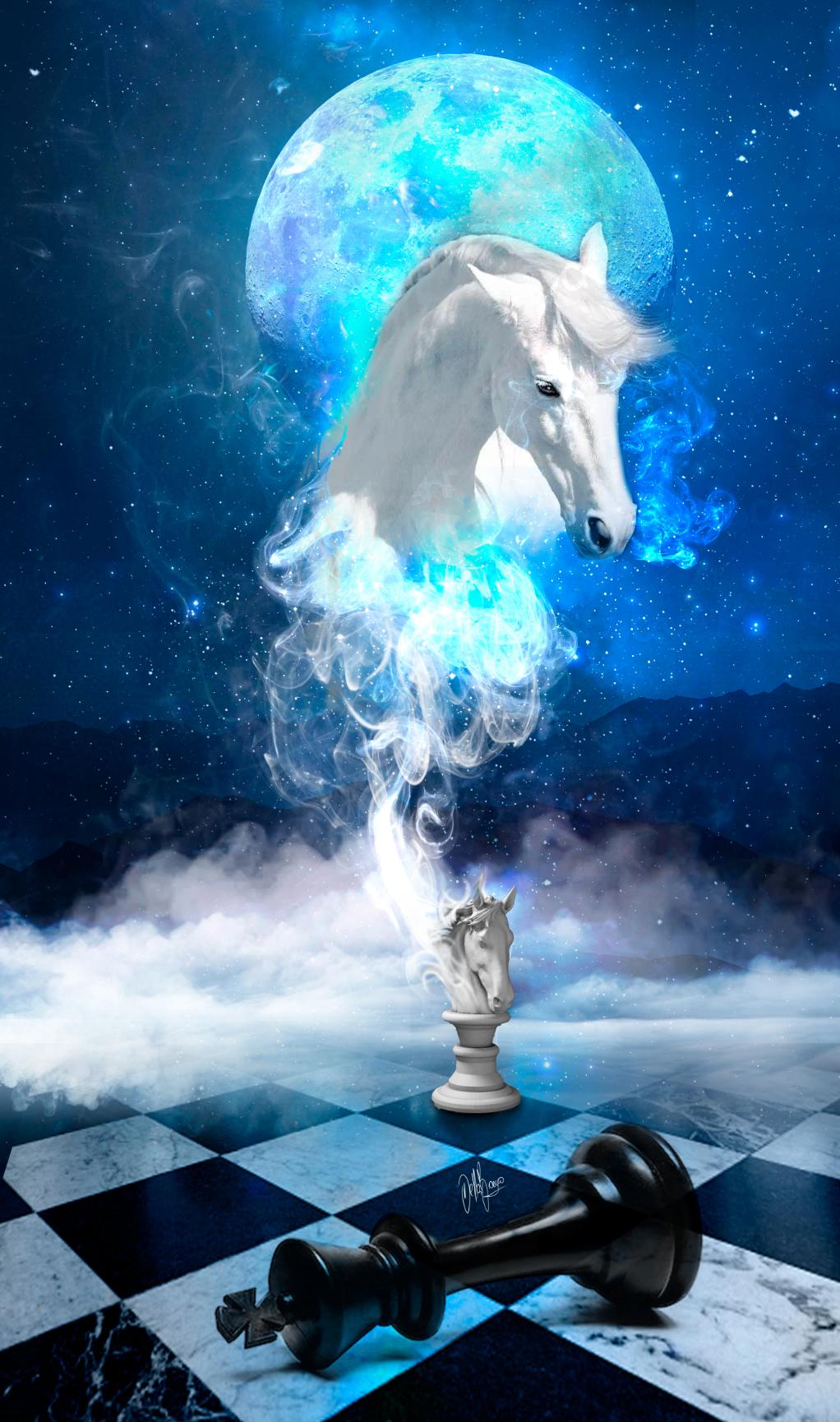
Chess knight is the only piece that does not obey the geometry of the board. It does not advance straight, it does not follow diagonals, it does not respect rows. It jumps. And it reaches squares that no other piece can reach by the same path. That irregularity is not a flaw — it is its operational advantage. What this card proposes is not transgression for the sake of transgression, but the discovery that there are problems that can only be resolved from an angle that linear logic does not contemplate.
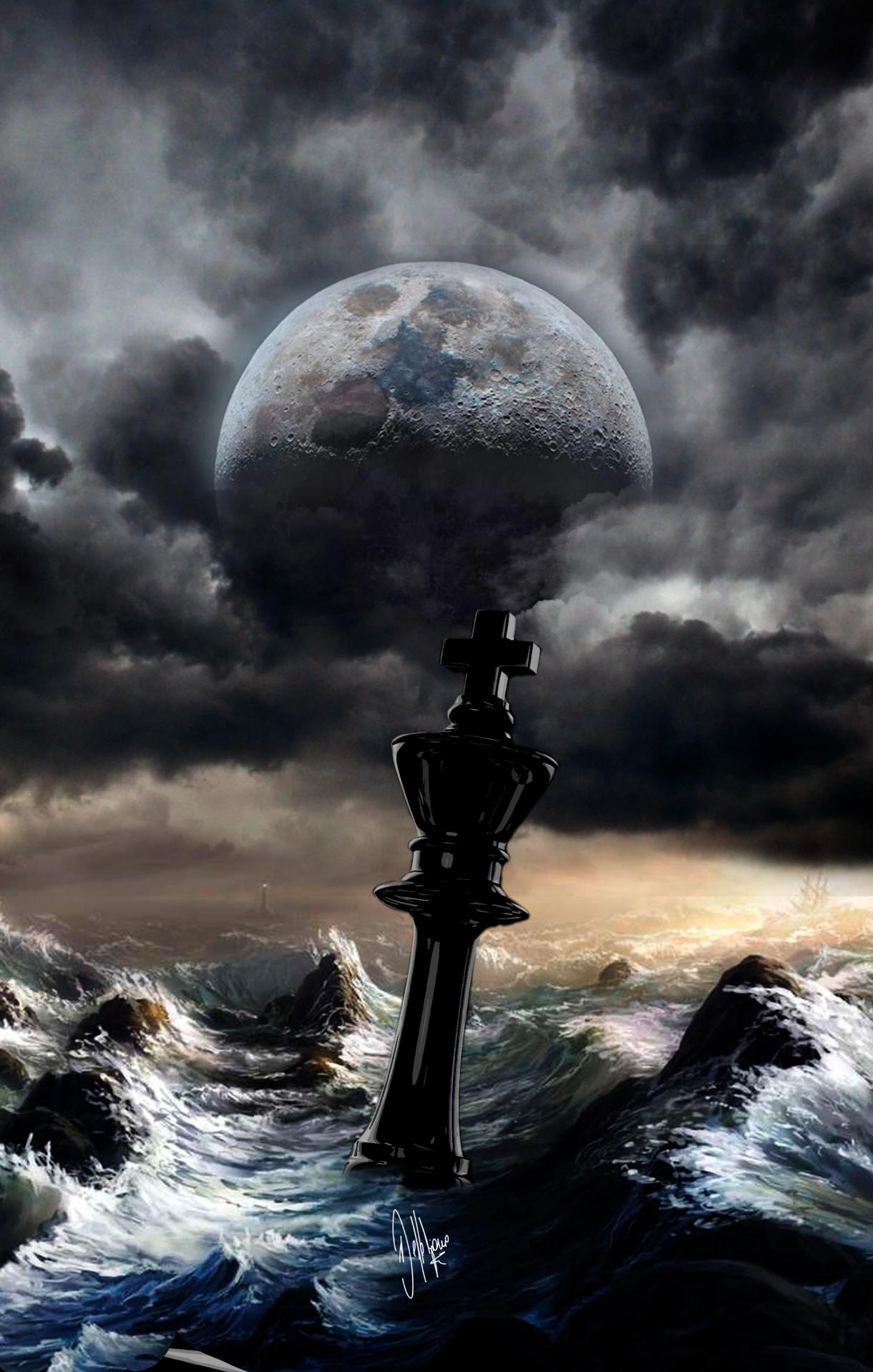
What topples the king is not an army or a prolonged siege. It is a single precise movement. There is a huge difference between accumulating force and applying precision: force needs mass, time, wear; precision needs to see what others do not see and act before the pattern closes. Structures that seem immovable — crystallized beliefs, roles that were assigned to you, ways of functioning that no longer represent you — rarely fall by frontal impact. They fall when something touches them from a place they had unprotected.
The transformation that follows the correct move is not violent. It is a change of state: what was compressed in a rigid form — the wooden piece, the pure strategy, the bodyless calculation — begins to expand into something alive. That is what happens when you stop planning and execute: thought becomes presence, potential becomes act. It is not mystical transcendence — it is the concrete difference between knowing what needs to be done and doing it.
And that movement is not done in full light. It is done in the semi-darkness, with lunar perception — that intelligence that sees enough to move but not so much as to paralyze you with excess information. The master move is not born from exhaustive analysis. It is born from the instinct that knows something before the mind finishes processing it.