Back to gallery
The Consciousness - Illusion of the Ego
Card N°17 · Mind Level

The Consciousness

Illusion of the Ego

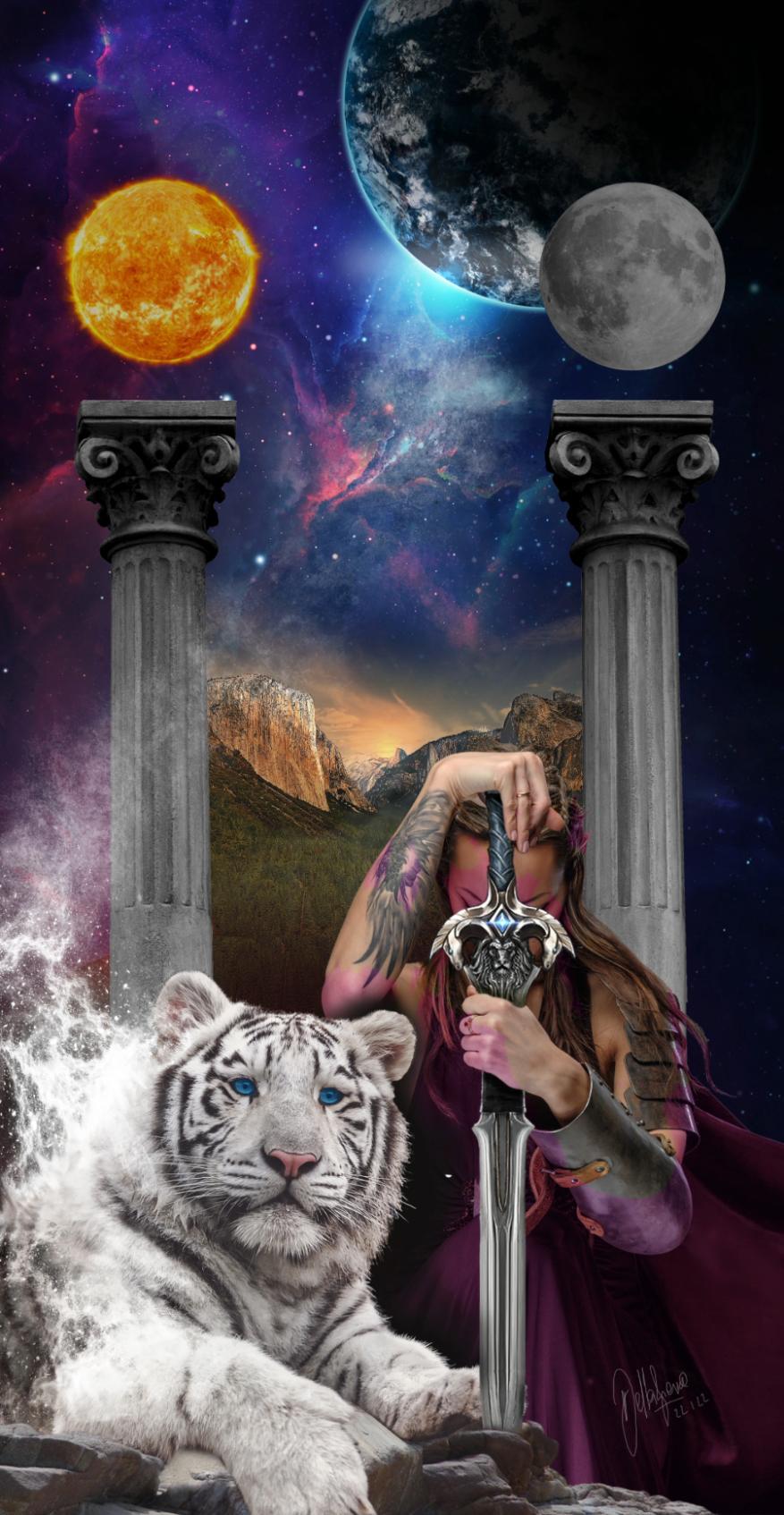
This world is beautiful. And it is a trap. Not because it is false — but because it convinces you that it is all there is. The pillars open wide, the landscape invites you in, and the light enters warm and golden. But between you and that beauty stands a guardian with a sword pointing downward, and a tiger that does not blink. Maya does not forbid you from passing. She asks you if you know what you are looking at.

The Consciousness appears when you have mistaken the landscape for the totality. It does not ask you to destroy what you see — it asks you to stop believing that this is all there is. The enemy here is not external. It is the version of you that built itself out of roles, definitions, and comforts, and now refuses to let go.

Maya does not deceive with darkness. She deceives with beauty. That is the ego's most effective trap: building a world so warm, so golden, so well-crafted, that it would never occur to you to ask if there is anything more. The veil of illusion does not present itself as a threat — it presents itself as a home. And that is why crossing the threshold is so difficult: not because what lies on the other side is terrifying, but because what lies on this side is too comfortable.

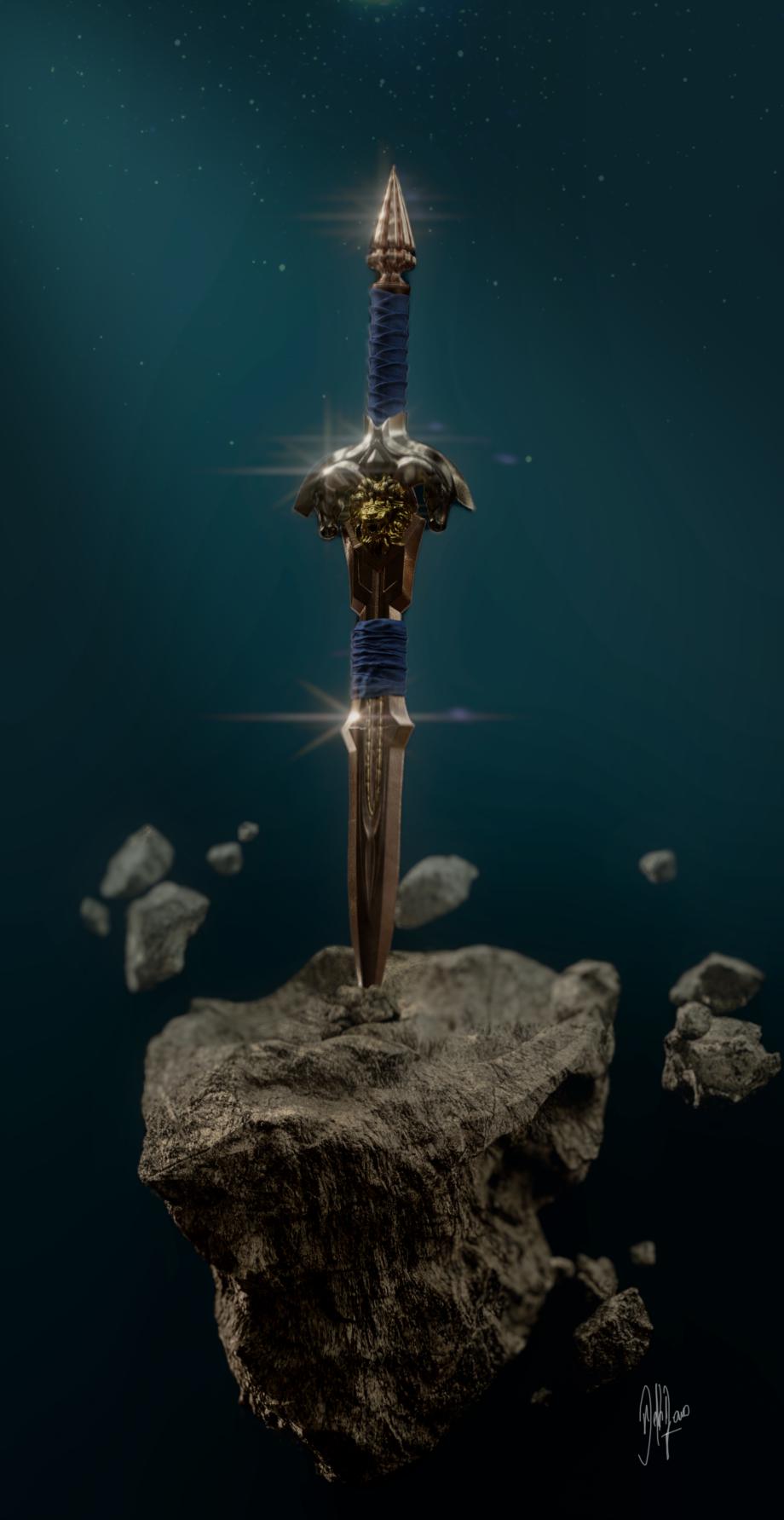
The guardian does not block your way. She holds her sword downward — Mercury operating as always: discernment driven into matter, not into abstraction. But here, the sword is not a weapon of combat. It is a mirror of coherence. Maya shows it to you, and the implicit question is whether you can handle the sharp edge of your own honesty. Her gesture is intentionally ambiguous: is she guarding the portal, or is she bowing to the one who arrived with their coherence intact? What you see in her says more about you than about the guardian.

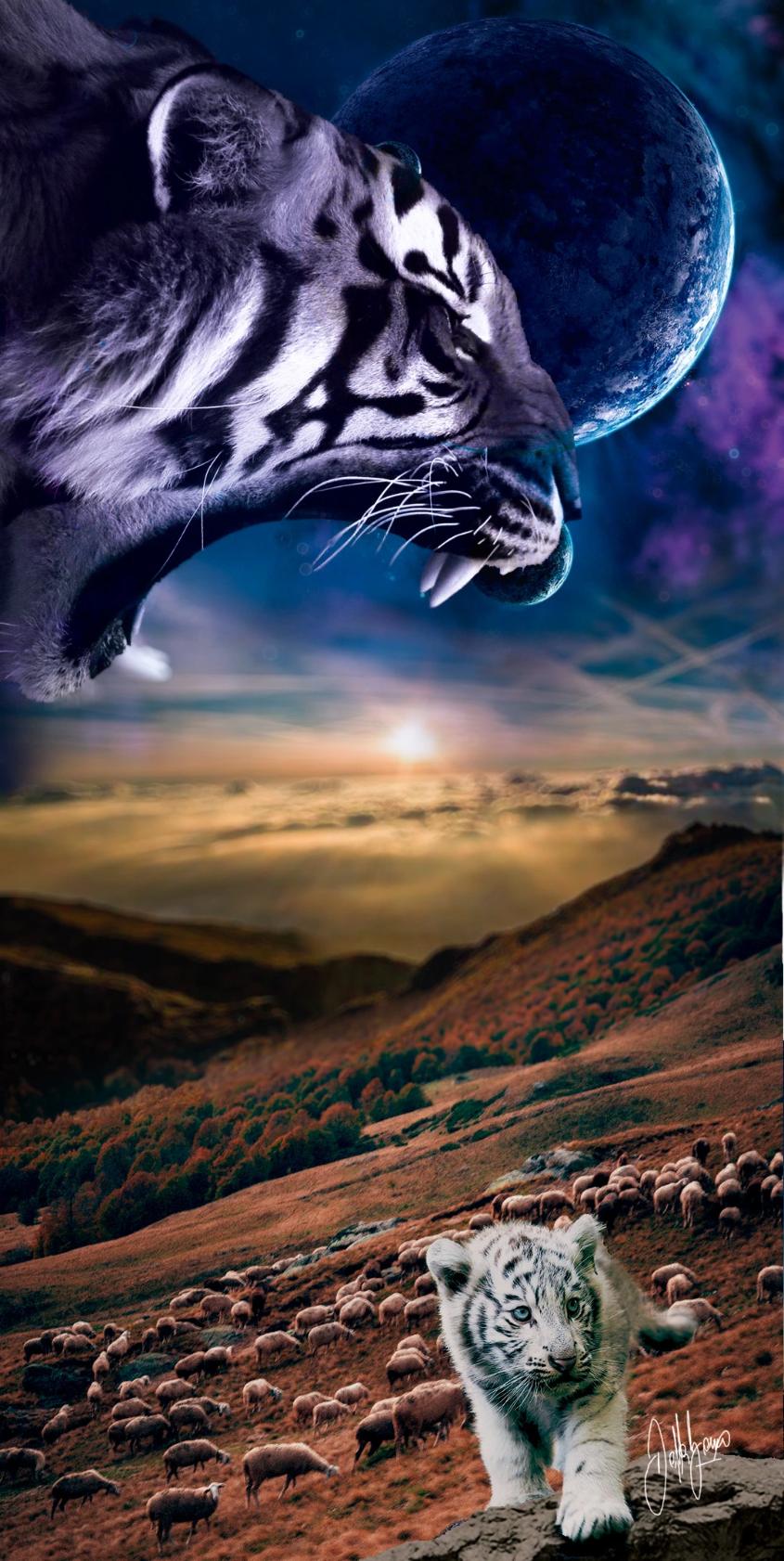
By her side, the tiger is the most direct element of the entire scene. It does not argue, it does not build narratives, it does not disguise itself. It looks at you and does not blink. In a space filled with veils and dualities, the tiger represents what remains when the mind stops manufacturing stories — pure perception, prior to the ego. If Maya is the one who guards the illusion, the tiger is what you are before the illusion even begins to operate.

The pillars frame everything as what it is: a temple of duality. Sun and moon, conscious and unconscious, spirit and matter — the ego operates on this stage and makes it look complete. But the Vedantic tradition already pointed it out: the phenomenal world is not false, it is incomplete. Confusing the partial with the total is the root of all illusion. Crossing the pillars with consciousness is not about denying the beauty of the world — it is about ceasing to believe that your identity begins and ends with what you can see and touch.

Maya — The guardian who does not block

What is seen: A woman with long hair, wearing a subtle armor of purple tones, with visible tattooed arms. She holds the sword with both hands, blade pointing downward, her head slightly inclined.

Meaning: Maya is not the illusion — she is its guardian. She does not create the deception; she protects it. Her armor is not heavy metal but a subtle vestment — the protection of a plane where strength does not come from the body, but from consciousness. The fact that she holds the sword pointing downward is consistent with the deck's overall symbology: the sword is discernment, and discernment drives into matter, not into the sky. Maya is not fighting you. She shows you the edge and asks you if you can handle it.

The Inverted Sword — Mercury driven into the earth

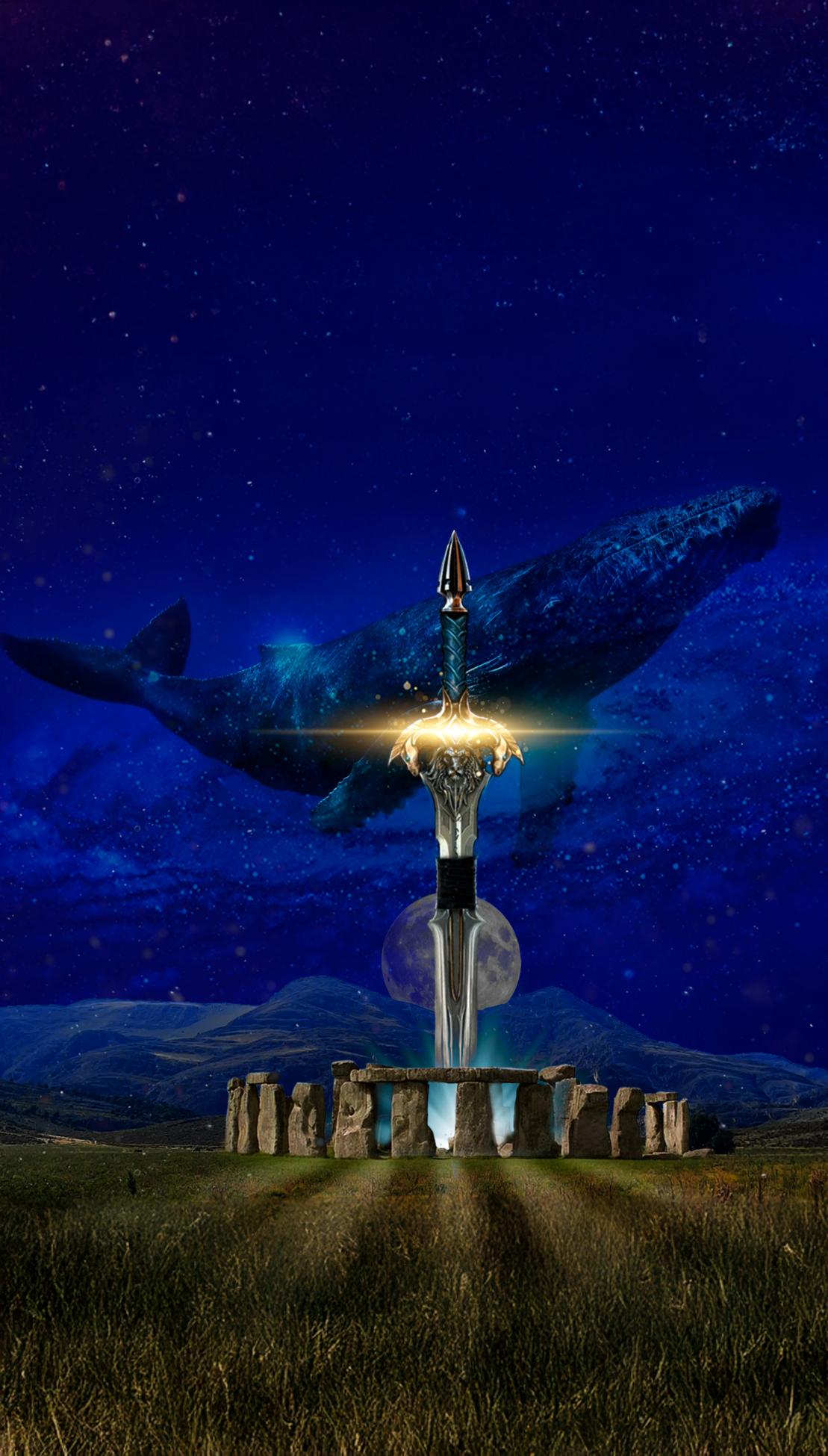
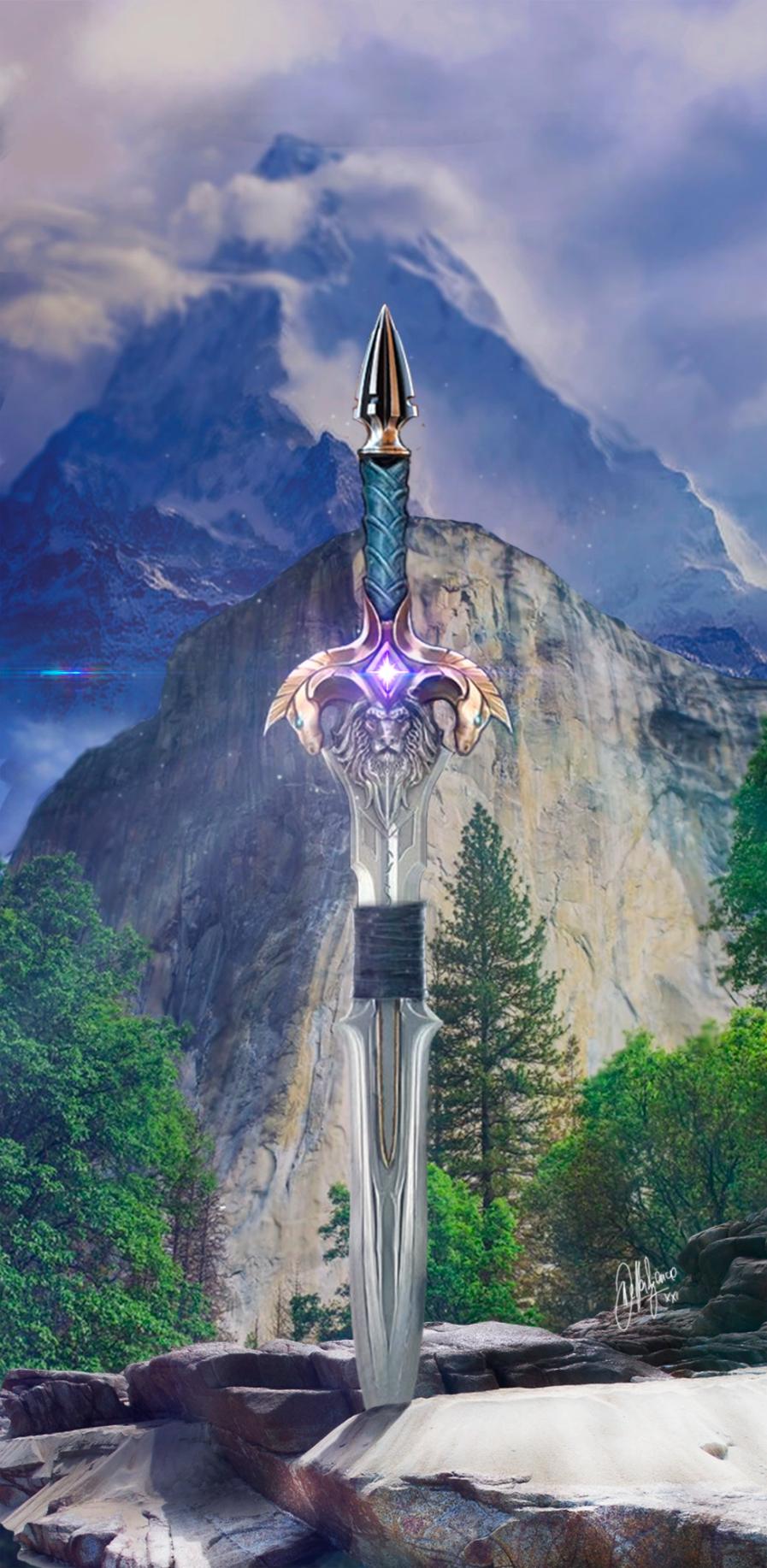
What is seen: The same ornamental sword featuring the guardian face on the guard. Gripped with both hands, blade pointing downward.

Meaning: The sword has always pointed downward. It is the discernment that penetrates matter, not the kind that evades it. Mercury — the principle of coherence between what you think and what you do. Here, it is not a weapon of combat. It is an instrument of vertical cutting: it separates the true from the illusory inside of you, not outside. Passing through this portal does not require brute strength. It requires honesty with what you find when you look within.

The Two Pillars — The gateway of duality

What is seen: Two classical Corinthian pillars, one on each side, framing the scene like the entrance to a temple.

Meaning: The pillars are the entry point into the dual world — light and shadow, sun and moon, spirit and matter. Between them lies the illusion: everything the ego builds to feel real. The pillars are not the problem. They are the structure. What happens between them — and how you interpret it — is where the illusion operates. Crossing the pillars with consciousness means entering the world knowing it is beautiful and incomplete at the same time.

The White Tiger — The force that observes

What is seen: An adult white tiger, lying down beside Maya, its blue eyes looking directly at the viewer. Still, attentive, showing neither threat nor submission.

Meaning: The tiger does not protect Maya — it accompanies her. It is the instinctual part that needs no disguise. In a temple full of veils and dualities, the tiger is the most direct element of the image: it looks at you, it does not blink, it does not argue. It is who you are before the mind begins to construct stories. If Maya is the guardian of the veil, the tiger is what remains when the veil falls.

Sun, Moon, and Earth — The three planes of deception

What is seen: In the sky, a golden sun on the left, the Earth in the upper right, and the gray moon below. Three celestial bodies visible simultaneously.

Meaning: The sun-moon duality is the most obvious: conscious and unconscious, action and intuition. But the Earth in the middle completes the trio: it is the plane where the illusion is lived, the stage where the ego operates. Together, all three say that the illusion is not just mental or emotional — it is total. It encompasses what you think (sun), what you feel (moon), and what you live (earth). Maya governs all three.

The Landscape Between the Pillars — What appears to be real

What is seen: A valley with rocky mountains and a warm sunset light, visible between the two pillars. Like a window into the natural world.

Meaning: This is Maya's veil turned into a landscape. It is the world just as you perceive it: beautiful, tangible, full of light and form. And it is not false. But believing that this is all there is — that your identity begins and ends with what you see between the pillars — is the illusion of the ego. The landscape seduces you with its beauty. What Maya guards is not a horrible secret. It is the understanding that there is more, and that this "more" cannot be seen from here.
Guided meditation
Coming soon

Guided Meditation

Will be available soon.

Card Affirmation

"What I see is real. But it is not everything. And I no longer need it to be."

What I Believe vs. What Is

Divide a sheet of paper into two columns (like the ones in the image).

On the left, write "What I believe I am" — your roles, your definitions, what you would say if someone asked you who you are.

On the right, write "What remains if all of that falls away" — if tomorrow you had no title, no name, no history, no relationship, no role. What would be left?

The left column is the landscape between the pillars: beautiful, real, but incomplete. The right column is what Maya guards behind the veil. Notice the difference.

  • What part of my identity is genuine, and what part is a landscape I built just to feel safe?
  • What illusion about myself am I holding onto that I find hard to release because it is too comfortable?
  • If Maya looked at me and asked, "Do you know what you are looking at?", what would I honestly answer?
  • Am I fighting external enemies when the true opponent is inside?
  • What happens when I stay as still as the tiger — without arguing, without building, just observing?
  • Can I admit that something beautiful can also be a trap?

The Consciousness does not destroy the illusion. It sees it.

Maya is not your enemy. She is the guardian of a threshold you can only cross when you stop mistaking the landscape for the totality. The world between the pillars remains beautiful — but it no longer traps you, because you know there is something far beyond what the eyes can see.

Previous Next