The Sword
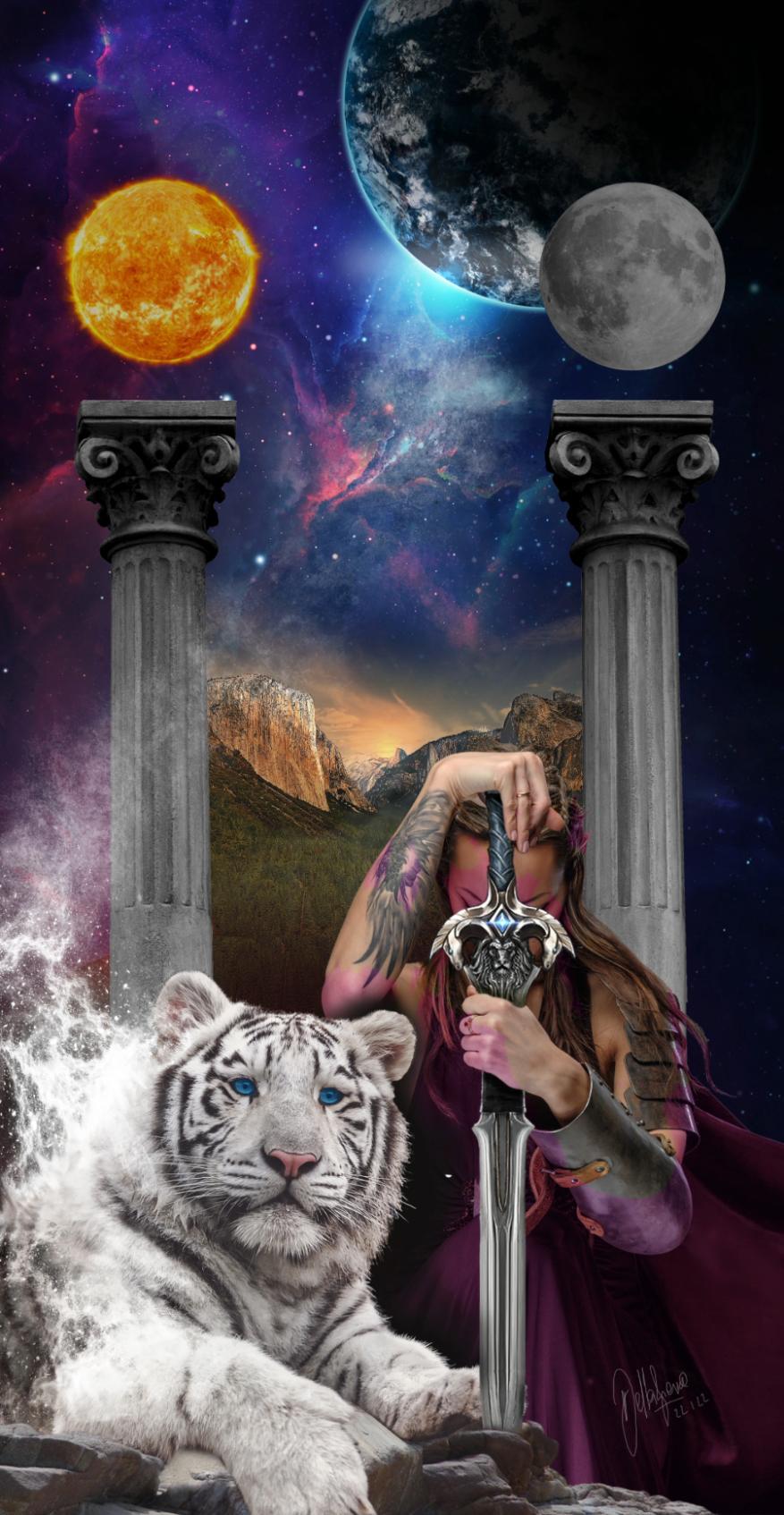
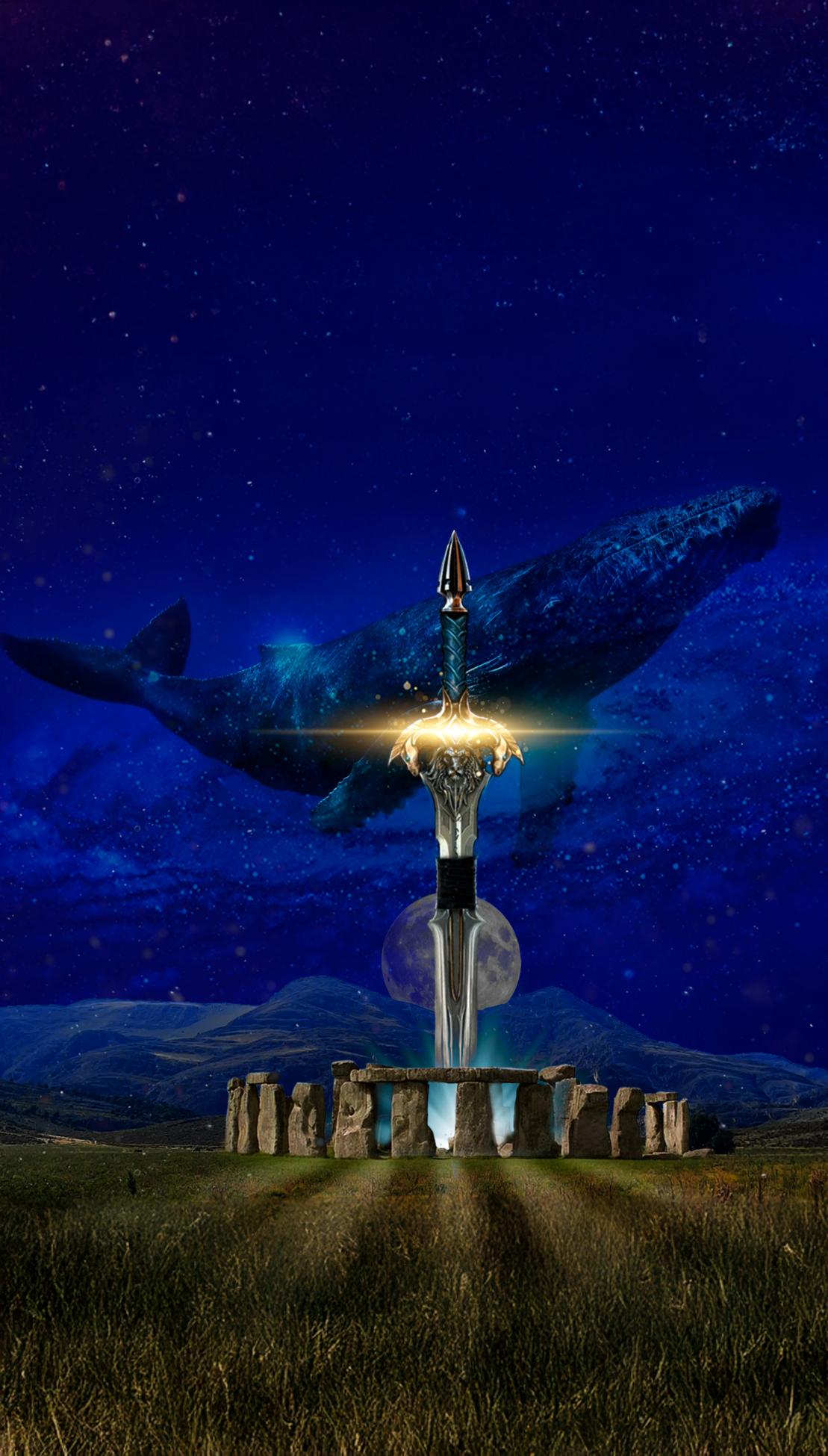
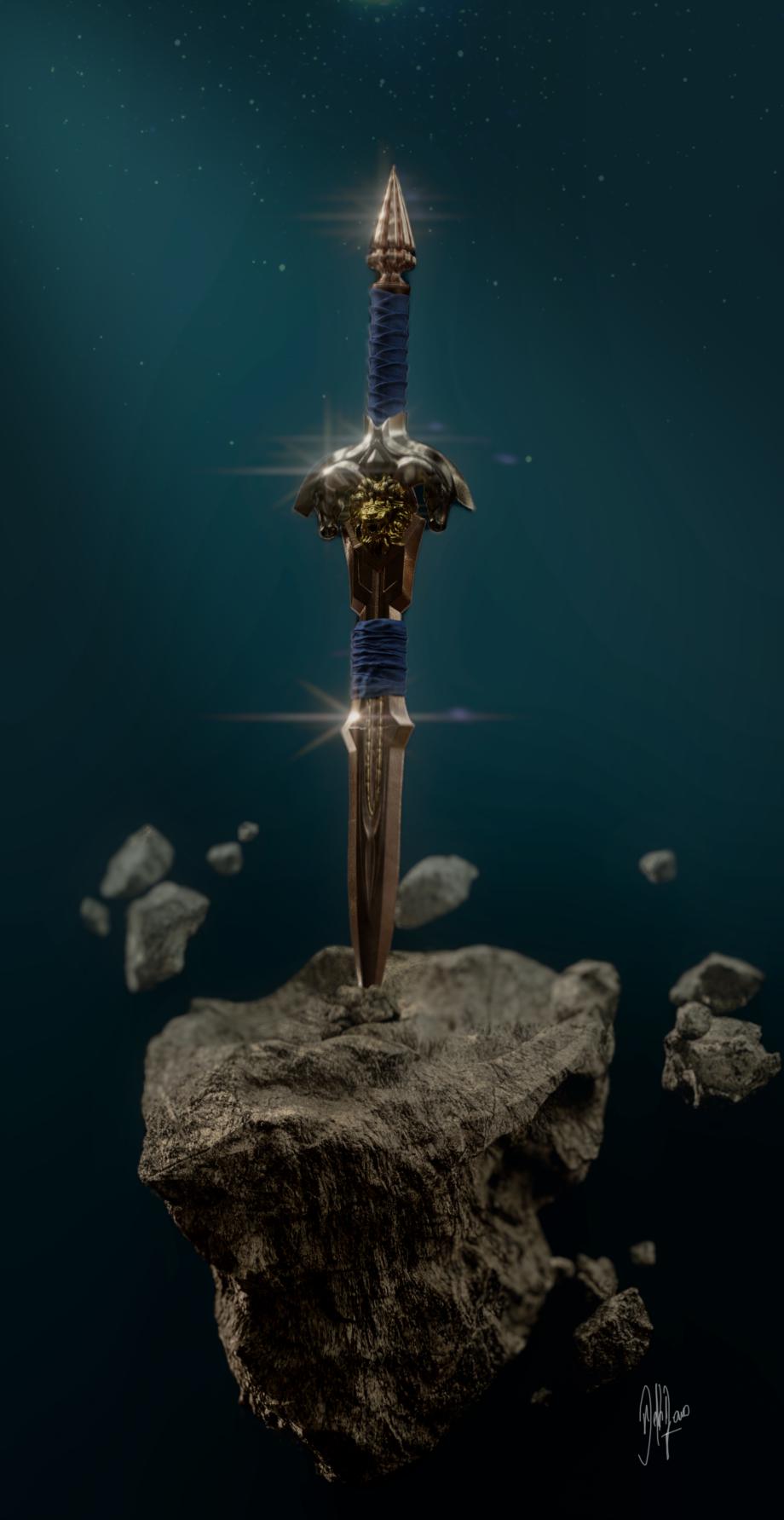
Alchemical: The flaming sword is the sulfur of the spirit, the active and masculine principle that purifies (es.wikipedia.org). In the Great Work, it symbolizes the internal fire that dissolves the old to forge the new. By cutting through illusions, it acts as alchemical fire that transforms the lead of unconsciousness into spiritual gold.
Hermeticism: As an archetype, the sword embodies the principle of Mentalism: our reality is a product of the mind (the “Everything” is mind (es.wikipedia.org). The sharp blade is also the boundary line between the real and the apparent. By wielding it, we affirm that intellectual truth and will determine our world. According to hermetic philosophy, there is no more powerful tool than the conscious decision to cut illusory bonds: true magic resides in the mind that wields the sword.
Jungian psychology: Archetypically, the sword represents the inner spirit and cold reason. It is the instrument with which the separate ego delimits the Self. As the symbol of the Magic Sword points out, this mental utensil “draws a line between the essential and the superfluous, between the self and the other” (mymythos.org). Possessing this inner sword means having a beacon of conviction and ethical clarity. It also recalls the image of the armed hero, determining his destiny. However, Jung also warns of the shadow of the sword: excessive cutting or rigid thinking. In balance, the sword brings the power to discern personal truth and cut the chains of limiting beliefs.
The White Tiger
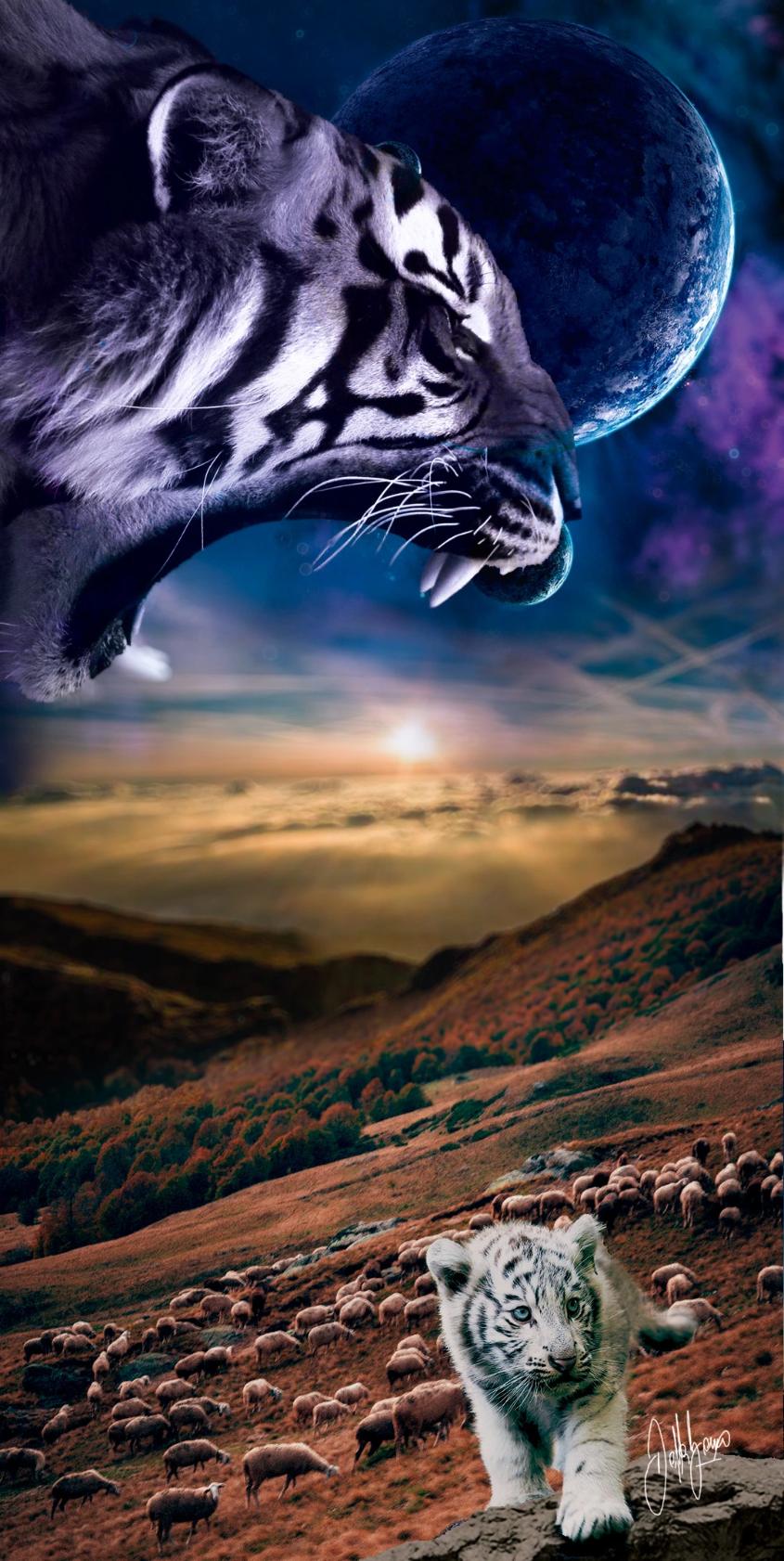
Alchemical: The tiger with snowy fur evokes the alchemical Mercury, the intuitive and feminine soul that unites sulfur and salt (es.wikipedia.org). Its silver color suggests the state of albedo (whitening), the stage of purification where consciousness becomes clear after the dark nigredo. Like Mercury, the tiger is fluid, a silent guide in the process of inner transmutation. Its presence indicates the right mix of strength (sulfur) and intuition (mercury).
Hermeticism: In Hermetic terms, the tiger is the embodiment of Polarity and instinctive correspondence. It is the kingdom of Mother Earth and deep emotions (the moon), guardian of our hidden strength. It maintains the balance between the fierce and the calm: it reflects the maxim “opposites are identical in essence” (es.wikipedia.org). In his calm eyes the double sun-moon nature shines: he teaches us that immense power can beat within passivity. As a silent teacher, the tiger encourages us to integrate our shadow and recognize that these primordial energies are part of the Self, not enemies to fear.
Jungian psychology: The tiger appears in the psyche as a symbol of instinct, strength and courage. Jung places this feline among the images of the unconscious that reveal the anima or the inner life force. A naked tiger can indicate the wild and repressed nature of our collective unconscious. According to David Gev, in Jungian psychology the tiger “embodies instinct, strength and courage” but also the deep primordial energies of the Self. (davidgev.com). Facing the inner tiger means recognizing the fierce and creative side of our psyche, accepting the inner monster as part of the path to wholeness. It is the invitation home to the “Richard Parker” of consciousness, balancing reason and passion, the human and the animal, to emerge whole.
The Columns
Alchemical: The twin columns suggest matter-spirit duality. As the salt that supports the structure, they symbolize the base matter (the alchemical Salt (es.wikipedia.org)) on which sulfur and mercury operate. They act as the pillars of the inner temple, representing the opposites (earth/sky, conscious/unconscious) that must support each other in the process of Nigredo (burial of the old) and Albedo.
Hermeticism: The pair of columns is a classic hermetic emblem of balanced duality. It recalls the two opposite worlds (active/passive, light/dark) and the principle of Correspondence: what happens in the microcosm of our psyche is reflected in the celestial macrocosm. Here, the columns are like “pillars of the sacred temple” that connect heaven with earth. They speak to us of the Hermetic mandate to reconcile internal opposites – action and contemplation, strength and receptivity – as parts of a single spiritual journey. Walking between them is a conscious act of balance, holding “my truth” between twin poles.
Jungian psychology: In the psyche, these columns act as symbols of archetypal thresholds. Let us remember the columns Boaz and Jachin in Solomon's temple, a metaphor for reconciled polarities. Jungianly, they represent the middle path where the unity of the Self flows. Being between columns implies protecting oneself while opening the inner door: here lies the “non-duality” of the Self, beyond superficial separations. The unconscious invites us to cross this portal (the portal symbol is key) with courage, trusting in internal stability.
Sun and Moon
Alchemical: The Sun and Moon embody the inner mystical marriage: inner gold and silver that must come together to create the philosopher's stone of the soul. In alchemy, the Sun represents spiritual sulfur in its maximum radiation, while the Moon is the reflective purity of mercury. Their union analogous to the Alchemical Wedding produces the hermaphroditic Rebis, the total integration (es.wikipedia.org. Here, the simultaneous vision of both stars announces the peak of the process: the culmination of the Rubedo (the sun) through the lunar Albedo.
Hermeticism: They symbolize the principle of Correspondence and Polarity. The Sun (masculine, conscious) and Moon (feminine, unconscious) fused in the image illustrate that the opposite poles of the universe (matter and spirit, light and shadow) resonate with each other (es.wikipedia.org). According to the Kybalion, “as above, so below”: the conjunction of the king star with its silver sister indicates that the complete psyche recognizes its totality. Beneath her luminous embrace, Maya's stripped soul reflects the truth that inner balance manifests in cosmic harmony.
Jungian psychology: Jung would see in these stars the union of anima/animus. The Sun can be perceived as a symbol of the brilliant conscious ego, the Moon as the intuitive unconscious. Together they point to the synthesis of the Self: the card urges harmonizing solar energy (action, logic) with lunar energy (intuition, receptivity). By integrating the internal masculine/feminine principles, the psyche achieves wholeness. This dual radiance reminds us that only when consciousness (Sun) illuminates shadow (Moon) and vice versa, does complete self-discovery emerge.
The Armor
Alchemical: The armor that the woman wears symbolizes the protection of the ego still in the Nigredo phase: it is the resistant metallic shell, an amalgam of hardened matter. In alchemical terms, it could be associated with Saturn (lead) and calcination: removing impurities until revealing the golden essence within. Little by little, this heart must be tempered and transmuted: in the inner fire, the “iron skin” becomes pure gold.
Hermeticism: The armor represents the defenses of the self that, like the physical body, are a mirror of the mind. Philosophically, it is the symbol of firmly established will (genius principle of mentalism). It is the container that holds the internal energy in place; but Hermetic philosophy warns that “everything is mental”: the external armor illustrates the inner strength that is reinforced by believing in our own truth. Thus, refining the armor means purifying the mind of doubts – “I affirm my inner power”, carrying each piece with full awareness.
Jungian psychology: In Jungian, the armor is the ego “in welding”: the image of what we show to the world as complete individuals. It symbolizes the complexes and masks that have not yet been integrated into the Self. During this symbolic journey, understanding the armor means recognizing that rigid defenses (fear of change) are necessary to a certain extent, but must yield to the process of individuation. By allowing the tiger (shadow) and the sword (moods) to penetrate these defenses, the armor becomes more flexible: the ego learns to protect without closing the way to transformation.
The tattoo
Alchemical: MAYA's skin tattoo could be interpreted as a personal alchemical mandala, a sign of an internal “seal.” It represents the signature of the internal alchemy that is carried out here. It could be seen as a sacred glyph: the salt impregnated with the consciousness of the sorcerer who transcribes the journey. In the Hermetic tradition, wearing symbols on the skin connects the bodily microcosm with the spiritual macrocosm.
Hermeticism: The tattoo is the personal trace of the journey, a symbol of correspondence between the psyche and the divine. From the Hermetic perspective, it is a permanent reminder in the physical vehicle of a mental/esoteric truth. In its own way, it acts as a talisman that embodies the lesson of Maya in visible form, unfolding its “magic”: each time you observe it, you renew the act of awareness over the illusion.
Jungian psychology: As a personal archetype, the tattoo indicates aspects of the Self that have been recognized and embraced. I could hear the Insight obtained after passing through the illusion: a knowledge marked on the skin. In analytical psychology, body symbols can reflect the internal narrative; Here, the tattoo is the autobiography of the unconscious. Its presence suggests that wisdom (archetypal image) is already part of the identity, being permanently integrated into the individual's consciousness.
The Environment
Alchemical: The background of stepped columns and starry sky suggests the Nigredo: the dark night of the soul that precedes the dawn of Rubedo. This gloomy environment recalls the initial phases of fermentation where the old dies. But among the shadows the solar flame emerges, a prelude to sublimation. Thus, the landscape announces transmutation: the darkness of the ego begins to give way to the growing light of wisdom.
Hermeticism: The environment is a microcosm that reflects the inner state. The stars, the columns and the sky connect with the idea that the outer cosmos reflects the inner one.(es.wikipedia.org). Here, the temple lit by the solar-lunar duality is a mirror of the mind that seeks the truth. The visible structures suggest a field of sacred learning: the material world (columns, earth) and the supra-mental world (sky, cosmos) interact, reminding us that our psychic journey echoes in immensity.
Jungian psychology: The environment acts as a setting for the inner ritual. The pillars and the starry firmament are images of the implicit archetypes: the inner alchemical temple and the unconscious totality (cosmos). To walk through this symbolic landscape is to enter the Threshold of the Self, an intermediate place between ordinary consciousness and numinous reality. The vast panorama indicates that our journey is not solitary but connected to the Whole, reinforcing the feeling of being part of the great mandala of the universe.
Colors
Alchemical: The colors of this card obey the Great Work. Black, white and gold predominate: stages of Nigredo, Albedo and Rubedoes.wikipedia.org. The black of shadows (hidden wisdom) begets the pure whiteness of the tiger and the lady; The red-gold of the Sun announces the final blossoming. Each tone is a phase of internal transformation.
Hermeticism: Color opera as cosmic correspondence. The gold of the sun is spiritual gold; the silver moonlight, the silver of the soul (es.wikipedia.org). The light/dark contrast symbolizes the passage from ignorance (darkness) to knowledge (light). In the bicolored sky, the astral vibrations (“colors of the great work” of the stars) reflect the principle of Polarity and Vibration of Hermeticism: the universe vibrates in a spectrum that our spirit begins to tune.
Jungian psychology: Jung would see these colors as archetypal projections: the black of the shadow, the white of the purified unconscious, and the gold of the illuminated Self. Dressing the tiger in white is symbolically painting the light of consciousness on the instinctive. The golden aura that bathes the scene means the awakening of the inner sage. In summary, the color palette tells us about the gradual return of consciousness (light) to the depths of being (darkness), guiding the soul towards its inner plenitude.